Silencing the Voices of Resilience
April 2024
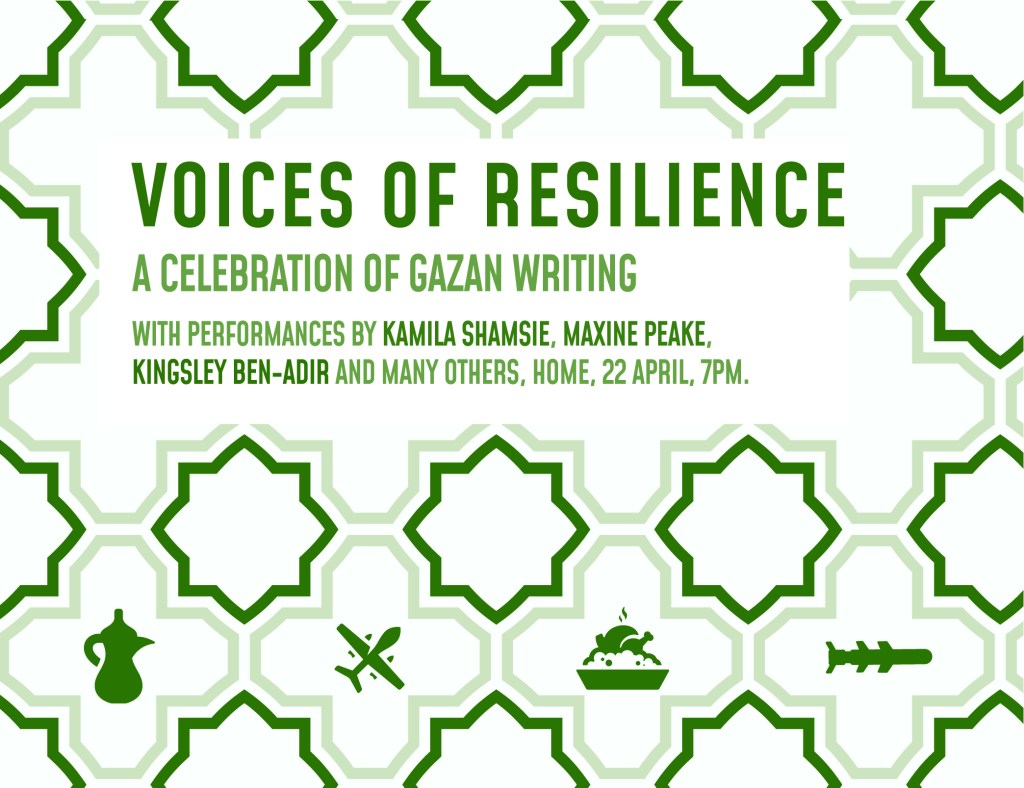


3rd April 2024
Dear Karen O’Neill and the HOME Board,
I write in response to the saddening and troubling cancellation of the Voices of Resilience following a letter from the JRC which, in its targeting of writer Atef Abu Saif, engages in crude Islamophobia and anti-Arabism… The Muslim and Arab as Holocaust-denying. The Muslim and Arab as threat, to be feared, othered and cancelled. That HOME and its Board cancelled the event after this letter is deeply disquieting. Reviewing the original Arabic of the Al-Ayyam interview cited in the letter, Saif’s words are far from denials. Rather, Saif recognizes the tragic enormity of the Holocaust, “وهي قد لا تكون مسبوقة في التاريخ من حيث بشاعتها”, its unparalleled barbarity, “ما تم بحق اليهود وحرقهم على أساس ديني أمر من الفظائع البشعة في التاريخ”, that Hitler’s crimes must never be forgiven or tolerated, “فالجرائم التي ارتكبها هتلر بحق البشرية لا يمكن غفرانها أو التسامح معها”, and makes a simple plea for the horrors of the Holocaust to never be repeated, “ولا يمكن لنا أن نقبل شيئاً مشابهاً حدث مع غيرنا ونقول عنه صواب”. Indeed, Saif, an incisive and sensitive writer, has been savagely beaten by Islamist militants for protesting against Hamas.
But this cancellation, while distressing and frustrating, was not surprising as it follows a pattern of art organizations announcing and then cancelling Palestinian events. What really wounded was the language used by HOME in its cancellation statement.
Growing up in a northern England working-class Muslim culture, among Asian, African and Arab Muslims, to be physically attacked in street and school, verbally abused, spat on and systemically dehumanized for our race and religion was a daily reality. From the dual pressures of an antagonistic society and a conservative Islamic culture, one of the few escapes was creative work. Film, books and comics, music. Terms like ‘creative’ and ‘creativity’ weren’t used as such words then belonged to the idiom of the white middle class, not the rundown housing estate, deprived street, failing school, strict madrasah. Works of creativity were mere escapes. Creative self-expression was not encouraged, because of religiocultural strictures and the sadder fact that the chances of a bright future for a working-class Muslim artist were hopelessly slim. In the culture I come from, creative endeavour was and still is seen as rarefied, an enterprise of the privileged.
I first visited HOME in my mid-twenties, the typical art organizations still overwhelmingly white and middle class, rife with self-congratulatory posturing and a misguided sense of propriety, adrift from the culture I was raised in due to a growing appreciation for the scientific over the theological, ambivalence towards organized religion and doubts about the infallibility of Qur’anic verse. I came only because HOME was the sole local venue screening an obscure South Korean film I wanted to watch and my interest in South Korean cinema, then niche, overrode any qualms about feeling out of place in an arts venue. Visiting HOME was transformative. Here, at last, was an organization that seemed sincerely committed to widening access to the arts, welcoming all regardless of background, with a distinct political identity, one woven into its very brand. A politicism that, despite not completely identifying with, was hard not to be drawn in by. While I felt I’d found a place that offered succour and comfort to the lost artist, the outsider, the outcast, convincing family and friends that HOME was different took some effort. The feeling was, understandably, that art venues were not for people of colour or low socioeconomic status, exclusionary, any attempts to diversify merely tokenistic gestures to be treated with suspicion. I persuaded holders of such beliefs to visit HOME with me. Some left with mixed feelings, others liked HOME and went on to visit independently. Urging the sort of people who regard art galleries or independent cinemas as not really for them, not easy places to be in, to visit HOME was a difficult, thankless endeavour, but one I persisted in up until the evening of Wednesday 27 March.
That evening, reading the sentence “HOME is a politically neutral space” felt like having a small but lethally sharpened knife slipped between the ribs. Those responsible for writing and approving the publication of these words must misunderstand HOME, what HOME might mean to the people they have little everyday interaction with. That sentence, in its careless vulgarity, ended my monthly donations to HOME alongside my HOME Friend membership. If HOME was politically neutral it would not be HOME, its very culture stems from political unneutrality. True political neutrality would mean to now expect events like An Evening with Nigel Farage or Tea with Tommy Robinson. This won’t happen because HOME is not a politically neutral space, nor should it pretend to be.
HOME erred gravely in silencing the Voices of Resilience and posting such an ill-judged statement of defence. As a writer and occasional publisher who has helped publish fiction on topics like bereavement, drug dependence, female relationships in South Africa, anti-Arab racism, I keenly appreciate the value of storytelling. That the event sought to celebrate Palestinian literature congeals my feelings into something closer to grief. But HOME can reconsider. Perhaps, if safety concerns are genuine, liaise with Greater Manchester Police over security arrangements for such an event and reschedule. HOME would then be remembered and valued as the organization that committed, as we all do, a mistake but recognized its mistake, learned from the mistake and did better.

Update 4th April:


Update 22nd April:
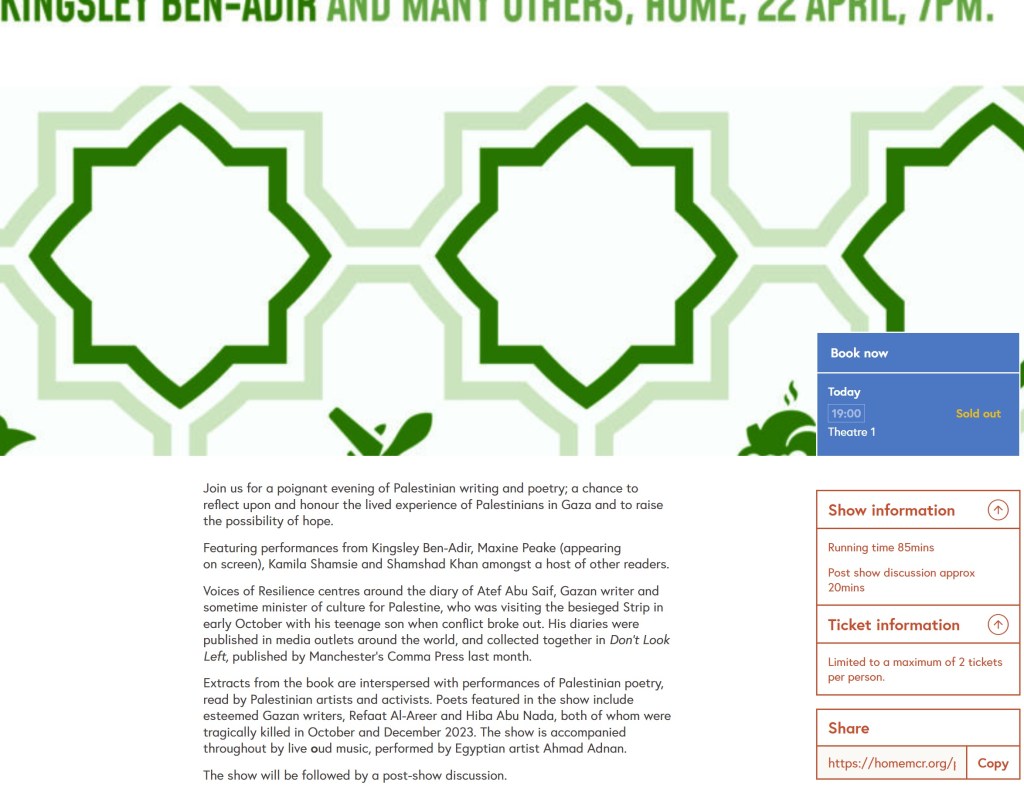
I was fortunate enough to be an usher for the swiftly sold-out reinstated event, helping with chaotic background proceedings before watching the evening unfurl beside the tech team. It was remarkable, historic, a humble act of heartfelt reading of poetry, prose and personal testimony leaving the listener trembling. The attempt to silence only amplified the Voices of Resilience, turning what should have been a small literary gathering into a momentous occasion.


 KHALID PATEL